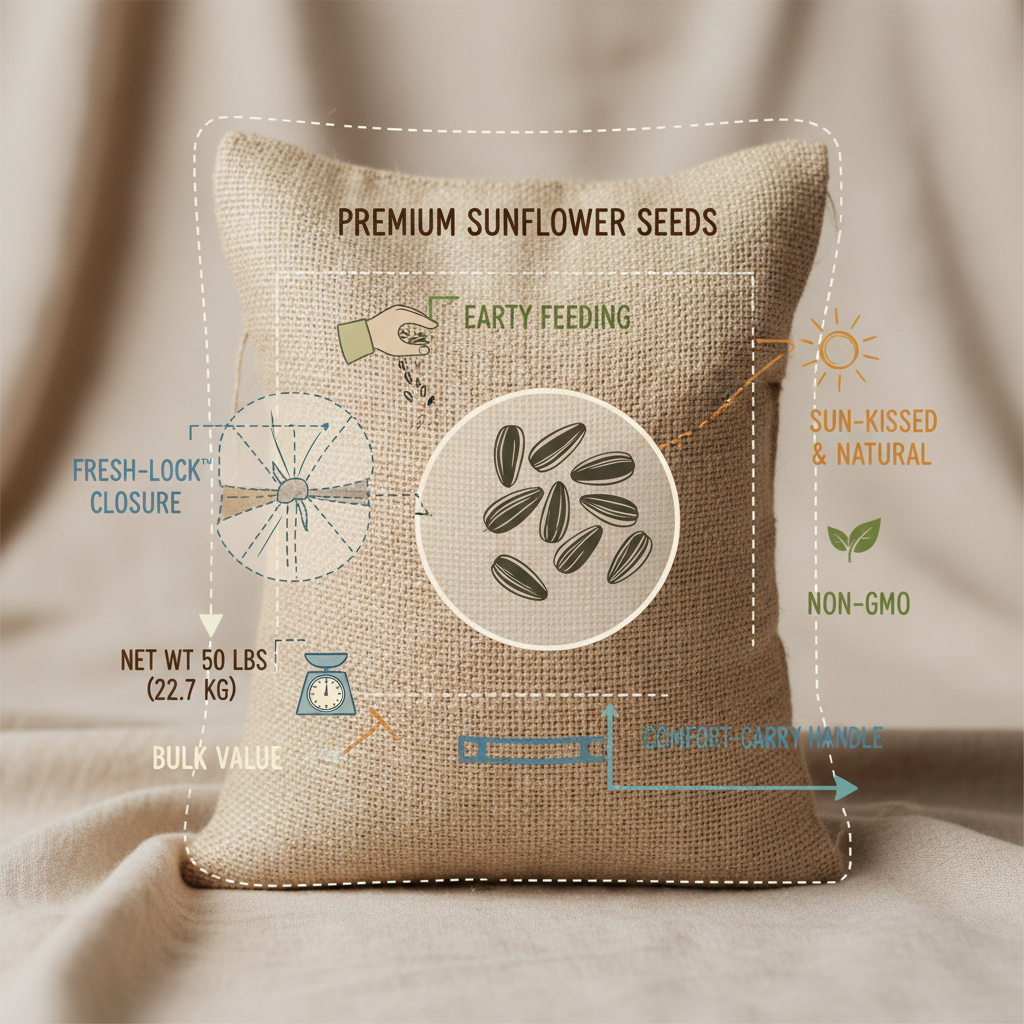
Selecting the right biological foundation is the most critical step for any agricultural venture, whether for large-scale oil production or ornamental gardening. When users seek to buy sunflower seeds for planting, they are often navigating a complex market of hybrids, open-pollinated varieties, and organic certifications that directly impact yield and resilience.
The transition from raw seed procurement to a successful harvest requires an understanding of seed viability, genetic purity, and environmental adaptability. In the broader context of the food processing and leisure snack industry, the quality of the initial planting seed determines the final nutrient profile and taste of the processed nuts and seeds consumers enjoy.
This guide examines the procurement logic for planting seeds, contrasting commercial agricultural needs with specialized gardening goals, and providing a framework for evaluating seed suppliers to ensure maximum germination rates and crop health.

Understanding Seed Varieties for Diverse Planting Objectives

Not all sunflower seeds are created equal; the choice depends entirely on the intended output. Oil-type sunflowers are bred for high lipid content and smaller seeds, making them ideal for industrial oil extraction. In contrast, confectionery-type sunflowers produce larger, striped kernels designed for the leisure snack market, where taste and texture are the primary value drivers.
Hybrid seeds offer superior uniformity and disease resistance, which is essential for mechanized farming. However, open-pollinated varieties are preferred by those seeking seed sovereignty, as they allow the grower to save seeds from one season to the next without losing genetic integrity.
For those looking to buy sunflower seeds for planting in ornamental contexts, the focus shifts toward petal color and stem height. Understanding these distinctions prevents the common mistake of planting industrial oil-seeds when the goal is visual aesthetics or high-volume snack production.
Critical Evaluation Factors for High-Yield Sunflower Seeds
When evaluating planting seeds, the "germination rate" is the most immediate metric of quality. A high percentage of seeds that successfully sprout reduces waste and ensures a consistent canopy, which is vital for suppressing weeds and optimizing sunlight absorption across the field.
Purity refers to the absence of foreign seed matter and the consistency of the variety. In the snack manufacturing industry, uniformity in seed size is crucial for the efficiency of automated peeling and roasting equipment, meaning that seed purity starts at the planting phase.
Furthermore, resistance to common pathogens like Sclerotinia or powdery mildew should be a non-negotiable requirement. Selecting seeds with built-in genetic resistance reduces the reliance on chemical fungicides and lowers the overall operational cost of the crop.
Practical Application Scenarios from Field to Processing
The journey from a planted seed to a finished product like flavored melon seeds or roasted sunflower seeds involves several critical touchpoints. In commercial agriculture, precise spacing and planting depth are tailored to the specific variety to avoid nutrient competition between plants.
In the context of food processing, the choice of seed affects the efficiency of the supply chain. For example, seeds sourced from regions like Xinjiang or Inner Mongolia are often prized for their adaptability to arid climates, resulting in a concentrated flavor profile that is highly desired in the leisure snack sector.
Integration with downstream processing is key. A manufacturer specializing in "Multi-flavor Peeled Melon Seeds" requires raw materials with a specific shell-to-kernel ratio to ensure that the roasting process penetrates the seed evenly without burning the delicate interior.
Analyzing Seed Performance and Germination Benchmarks
Quantifying the success of a seed batch involves comparing observed germination and growth rates against industry standards. While a standard seed might show moderate success, premium certified seeds typically exhibit higher vigor and more rapid early-stage growth.
Performance is measured not just by the number of plants that emerge, but by the "standability" of the crop—the ability of the sunflower to resist lodging (falling over) during high winds, which is a common risk for tall ornamental varieties.
buy sunflower seeds for planting Performance Metrics
The data suggests that investing in higher-grade seeds correlates with a reduction in seedling mortality and an increase in the average seed head diameter, directly impacting the total harvestable weight per acre.
Strategic Procurement and Planting Implementation Steps
Executing a planting plan requires a systematic approach to prevent common failures. The first step is soil analysis to ensure the pH and nitrogen levels are compatible with the sunflower variety, as over-fertilization can lead to excessive foliage growth at the expense of seed production.
Timing is the second critical factor. Planting must align with the last frost date and the local rainfall pattern. For those managing large tracts, using precision seeders ensures that the depth is consistent, which prevents "uneven emergence" and simplifies the subsequent weeding process.
Post-planting care involves monitoring for pests like aphids and managing water stress during the flowering stage. Implementing a crop rotation strategy, alternating sunflowers with legumes, can naturally replenish soil nitrogen and break pest cycles.
Future Trends in Seed Technology and Sustainable Farming
The agricultural sector is moving toward "climate-smart" seeds. We are seeing a rise in varieties engineered for drought tolerance and saltwater resilience, allowing sunflower cultivation to expand into previously marginal lands.
Biotechnology is also focusing on enhancing the nutrient density of the kernels. There is a growing market for seeds that naturally produce higher levels of oleic acid, which improves the shelf-life and stability of the oil, benefiting the food processing industry.
Sustainability is no longer optional; the shift toward organic certification is driving demand for seeds that are non-GMO and produced without synthetic chemical coatings. This transition is likely to redefine how buyers evaluate seed suppliers over the next decade.
Decision Matrix for Selecting Planting Seed Suppliers
Choosing a supplier is a risk-management exercise. A reliable supplier should provide transparent documentation, including lot numbers and certified germination test results, rather than relying on generic marketing claims.
The following matrix helps procurement officers distinguish between different seed sourcing models based on their specific operational goals and risk tolerance.
| Sourcing Model | Primary Focus | Risk Level | Best Use Case |
|---|---|---|---|
| Certified Hybrids | Maximum Yield | Low | Industrial Oil Production |
| Open-Pollinated | Seed Saving | Medium | Small-Scale Organic Farms |
| Ornamental Mix | Visual Appeal | Low | Landscaping & Gardening |
| Heirloom Varieties | Genetic Diversity | High | Specialty Niche Markets |
| Bulk Industrial | Cost Efficiency | Medium | Large-Scale Forage/Feed |
| Organic Certified | Chemical-Free | Medium | Premium Health Food Supply |
Ultimately, the decision should be based on the intended end-use of the crop. Whether the goal is a high-protein snack or an ornamental border, the seed is the primary determinant of success.
Frequently Asked Questions
Conclusion
The success of any sunflower crop begins long before the first seed hits the soil. By understanding the critical distinctions between seed types and prioritizing genetic purity and germination rates, growers can significantly reduce operational risk and maximize their harvest potential.
From the agricultural field to the sophisticated food processing lines of companies like XUANHANG TRADING CO., LTD., quality remains the primary driver of value. For those evaluating seed procurement or seeking professional information on high-quality seed products, detailed resources are available through www.yuyangmelon.com.