Understanding the dynamics of the melon seed price is essential for wholesalers, retailers, and snack enthusiasts alike. As a staple in the global leisure snack market, melon seeds represent a delicate balance between agricultural output and consumer demand, where small shifts in harvest yields can lead to significant price fluctuations.
Across various international markets, the melon seed price serves as a benchmark for the broader nuts and seeds sector. This pricing mechanism doesn't just reflect the cost of the raw product but incorporates the complexities of processing, flavor infusion, and the logistical challenges of maintaining freshness from the farm to the final consumer.
By analyzing the factors that influence the melon seed price, stakeholders can make informed procurement decisions, ensuring cost-efficiency while maintaining the high quality required for premium snack products like flavored peeled melon seeds and traditional roasted varieties.
Global Market Dynamics of Melon Seed Price
The global trade of leisure snacks has seen a surge in demand for nutrient-dense seeds, which directly correlates with the volatility of the melon seed price. According to industry trends, the shift toward healthier snacking options has pushed the price of premium, multi-flavor peeled melon seeds higher, as consumers are willing to pay a premium for convenience and taste.
Market fluctuations are often dictated by the harvest cycles in primary producing regions. When environmental factors impact crop yields, the supply chain tightens, causing an immediate spike in the melon seed price across international borders, affecting everything from bulk wholesale shipments to retail packaging.
Defining the Value Components of Melon Seed Price
At its most basic level, the melon seed price is the market valuation of processed seeds per unit of weight. However, for industry professionals, this price is a composite of several layers: the raw agricultural cost, the energy expenditure for roasting and peeling, and the additive costs for flavoring agents used in "flavored melon seeds."
Beyond the physical product, the price reflects the "grade" of the seed. High-grade seeds with uniform size and high oil content command a higher melon seed price because they provide a better sensory experience and longer shelf life, which is critical for the leisure snack industry.
Modern humanitarian and nutritional needs also influence this valuation. As seeds are recognized for their protein and mineral content, they are increasingly integrated into fortified food programs, creating a steady baseline demand that prevents the melon seed price from crashing during surplus years.
Primary Drivers Affecting Melon Seed Price
One of the most significant drivers of the melon seed price is the scalability of production. Large-scale industrial farming can lower the unit cost, but it often comes at the expense of the artisanal quality found in specialty snack brands.
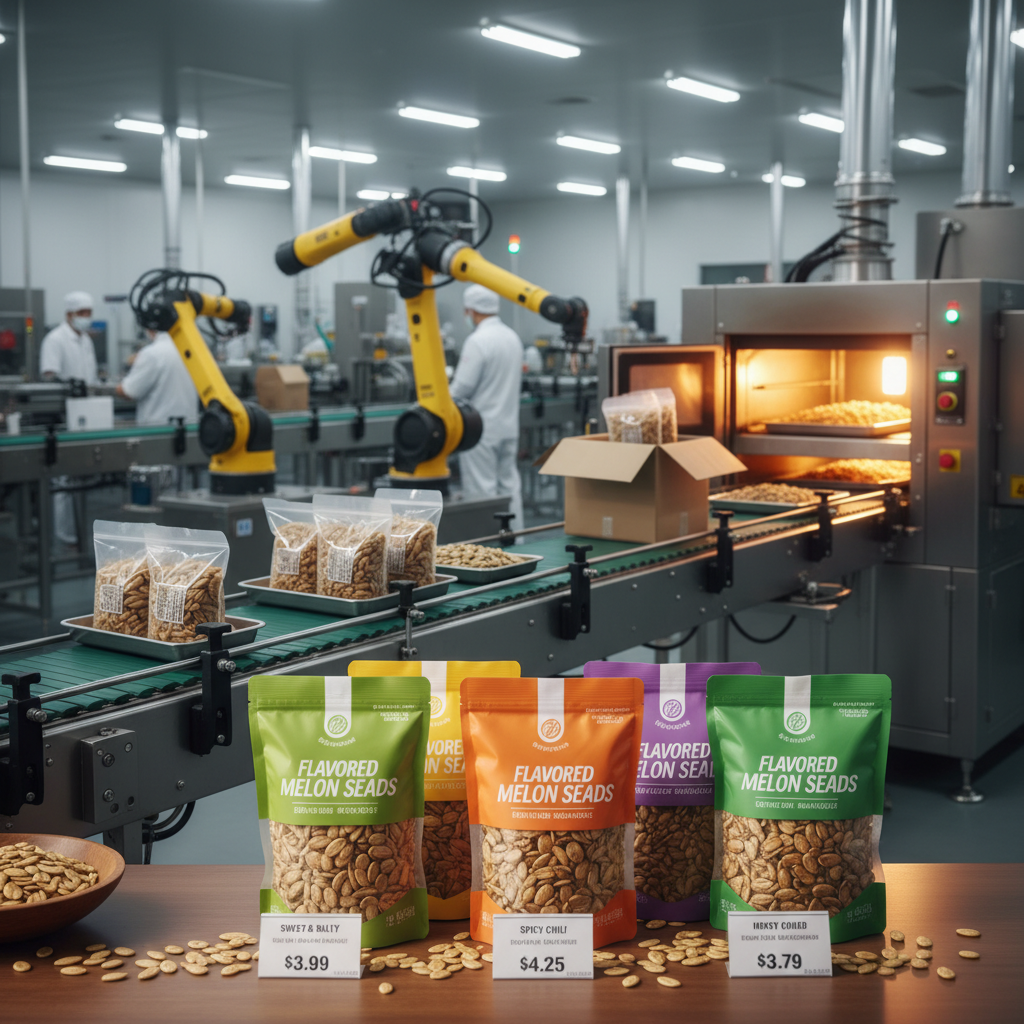
Processing technology also plays a pivotal role. The transition from manual peeling to automated, high-efficiency machinery has revolutionized the melon seed price by reducing labor costs, allowing multi-flavor peeled melon seeds to become accessible to a wider consumer base.
Finally, regulatory compliance and food safety certifications (such as ISO or HACCP) add a layer of cost. While these certifications increase the initial melon seed price, they provide the trust and reliability necessary for exporting products to stringent markets like the EU or North America.
Economic Impact and Cost Efficiency Analysis
Achieving cost efficiency in the procurement of seeds requires a deep understanding of the seasonal nature of the melon seed price. By leveraging forward contracts and strategic stockpiling during harvest peaks, manufacturers of biscuits, bread, and snacks can hedge against sudden price hikes.
The intersection of logistics and pricing is where most margins are won or lost. Optimized supply chains reduce the "hidden costs" that inflate the final melon seed price, ensuring that the end consumer receives a competitive price without compromising on the quality of the nuts or seeds.
Comparative Analysis of Melon Seed Price Factors
Real-World Applications and Distribution
In the commercial sector, the melon seed price dictates the formulation of compound snacks. For instance, in the production of Shaqima or specialty nut mixes, the ratio of melon seeds is often adjusted based on current market costs to maintain a stable retail price point.
Geographically, we see diverse applications. In East Asian markets, where roasted seeds are a cultural staple, the melon seed price is closely monitored during Lunar New Year, as demand spikes lead to short-term inflation. Conversely, in Western health-food zones, the focus is on the organic certification of the seed, which adds a premium to the base price.
Long-Term Value and Sustainability Benefits
Investing in high-quality seed sources provides long-term value that transcends the immediate melon seed price. Sustainability in sourcing ensures a consistent supply chain, protecting brands from the volatility of climate-induced crop failures.
From a consumer perspective, the value lies in the nutritional density. While a lower melon seed price might seem attractive, seeds sourced from sustainable, pesticide-free farms offer better health outcomes, creating an emotional bond of trust between the manufacturer and the customer.
Innovation in packaging also enhances long-term value. By extending shelf life through nitrogen-flushing technology, companies can manage their inventory more effectively, reducing waste and stabilizing the melon seed price throughout the year.
Future Innovations in Seed Pricing Models
The future of the melon seed price will likely be influenced by digital transformation. Blockchain technology is being explored to provide transparent "farm-to-fork" pricing, allowing buyers to see exactly how much of the cost goes to the farmer versus the processor.
Automation and AI-driven yield forecasting are also set to stabilize the market. By predicting harvest volumes more accurately, the industry can avoid the dramatic swings in melon seed price that typically follow unexpected weather events.
Furthermore, the rise of plant-based protein alternatives may shift the melon seed price upward as seeds are repositioned from "leisure snacks" to "essential nutritional supplements."
Analysis of Pricing Variables Across Different Melon Seed Categories
| Product Variant |
Price Volatility |
Processing Intensity |
Market Demand Score |
| Natural Roasted Seeds |
Medium |
Low |
7/10 |
| Flavored Peeled Seeds |
Low |
High |
9/10 |
| Organic Raw Seeds |
High |
Minimal |
6/10 |
| Multi-flavor Mixes |
Medium |
Medium |
8/10 |
| Industrial Bulk Seeds |
Very High |
Low |
5/10 |
| Premium Gift Packs |
Low |
High |
10/10 |
FAQS
The most common cause is environmental stress during the growing season, such as drought or pests, which reduces the total yield. Since the demand for leisure snacks remains relatively constant, a drop in supply leads to an immediate increase in the market melon seed price.
Yes, usually. The melon seed price for peeled versions includes the added cost of mechanical processing and the loss of weight during the peeling process, making them a more premium product.
Flavoring adds costs for ingredients (like spices or honey) and additional processing time. However, because flavored seeds are marketed as value-added snacks, the price increase often exceeds the actual cost of the additives.
Yes, many wholesale suppliers offer forward contracts. This allows businesses to agree on a fixed melon seed price for a set period, protecting them from seasonal volatility and ensuring budget stability.
Organic certification typically increases the price by 20-50% due to lower yields, higher labor costs for weed management, and the cost of certification audits. Consumers pay this premium for the perceived health and environmental benefits.
Logistics can account for a significant portion of the final price. Increases in fuel costs or container shortages directly inflate the landing melon seed price, prompting importers to seek more efficient shipping routes or local suppliers.
Conclusion
Navigating the complexities of the melon seed price requires a holistic understanding of agricultural cycles, processing innovations, and evolving consumer preferences. From the impact of raw material costs to the value added by multi-flavor peeling, every step of the supply chain contributes to the final market valuation.
Looking ahead, the integration of sustainable sourcing and digital pricing transparency will be key to maintaining a healthy and fair market. For those looking to secure high-quality seeds at competitive rates, staying informed on these trends is the best strategy for long-term success in the leisure snack industry. Visit our website for more details: www.yuyangmelon.com